
Introduction
On any given day, approximately 1 in 31 hospital patients in the U.S. has at least one healthcare-associated infection. Studies compound that figure with an uncomfortable truth: between 28% and 90% of healthcare workers contaminate themselves during PPE removal, with hands being the most frequent failure point.
PPE gowns and gloves only protect when donned and doffed correctly. Improper technique doesn't just reduce protection — it actively transfers contaminants from the PPE surface to bare skin, clothing, and clean surfaces.
This guide covers the correct donning and removal sequence, safe handling practices, and critical mistakes to avoid when using PPE gowns and gloves across healthcare and jobsite environments.
Key Takeaways
- Don gowns before gloves; remove gloves first during doffing
- The outside surface of all PPE is contaminated—never let it touch bare skin or clothing
- Perform hand hygiene before donning and immediately after removing all PPE
- Never layer multiple gowns or gloves—it increases contamination risk, not protection
- Match PPE selection to the specific task and hazard level
Why PPE Gowns and Gloves Are Essential
Gloves and gowns each serve dual protective functions that make them indispensable in contamination control. Gloves protect in two ways: they cover breaks in the skin that could allow pathogen entry, and they prevent hand-to-surface germ transfer that would otherwise spread infectious material across every surface a worker touches. According to CDC guidance, gloves are required whenever direct contact with blood, body fluids, mucous membranes, or nonintact skin is anticipated.
Gowns keep contaminants off clothing and prevent workers from carrying germs between tasks, patients, or workspaces. A gown protects the arms and exposed body areas from splash and spray, but its effectiveness depends entirely on proper removal technique.
Studies show that up to 65% of gown removals are performed incorrectly — most commonly by pulling the gown from the front rather than peeling it inside-out from the shoulders. That single mistake drags the contaminated exterior across bare hands and forearms.
When gowns and gloves are required:
- Contact with blood, body fluids, secretions, or excretions
- Anticipated exposure to nonintact skin or mucous membranes
- Situations where splash or spray is anticipated
- Contact precautions for patients with known or suspected infections spread by direct or indirect contact
The outside front of every gown and glove is considered contaminated the moment it contacts a hazard. Isolating that surface during doffing is not optional — it's where most self-contamination occurs.
Choosing the Right Gown and Glove for the Task
PPE selection must match the hazard type — biological, chemical, or particulate — and the task duration. A mismatch in material or size reduces effectiveness measurably and can introduce new hazards. For example, OSHA explicitly warns that improperly fitting PPE fails to protect workers and creates risks such as loose gloves catching in machinery, which contributed to over 18,000 cuts and lacerations and 1,700 amputations in the construction industry in 2021.
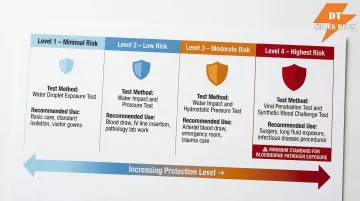
Gown protection levels:
Only AAMI Level 4 gowns are tested for viral penetration using synthetic blood and viral challenge tests. Levels 1-3 are tested only with water, which has a higher surface tension than blood, and cannot be considered impermeable to bloodborne pathogens or other potentially infectious materials. If your task involves exposure to blood or body fluids, a Level 4 gown is the minimum acceptable standard.
Glove selection criteria:
- Biological hazards: Nonsterile disposable medical gloves made of latex, vinyl, or nitrile. Studies show vinyl gloves have higher failure rates than latex or nitrile under clinical conditions.
- Chemical hazards: Selection depends on the specific chemical. Butyl gloves protect against highly corrosive acids and peroxide, while nitrile gloves provide protection from chlorinated solvents, oils, and greases.
- Fit requirements: OSHA mandates that PPE must properly fit each affected employee. Sleeves that are too long or gloves that do not fit make it difficult to operate equipment and can get caught in machinery.
For distributors and contractors sourcing PPE for jobsite use, getting the specifications right from the start matters. DT Sales Reps supplies properly rated safety gear alongside conduit, cable, and other jobsite essentials — so you're not chasing down multiple suppliers when a project needs both materials and compliant PPE.
How to Properly Don PPE Gowns and Gloves
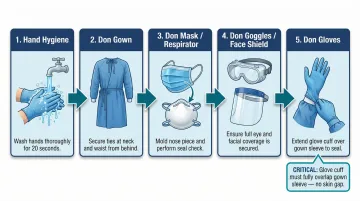
Donning order follows contamination logic: larger protective barriers go on first so that subsequent PPE layers extend over them. The standard CDC sequence is:
Gown → Mask/Respirator → Goggles/Face Shield → Gloves
This order ensures each item overlaps the one beneath it, eliminating gaps where contaminants could reach skin or clothing.
Hand hygiene is the non-negotiable first step. Use an alcohol-based hand sanitizer or wash hands with soap and water before touching any PPE. Contaminated hands will transfer pathogens to the inside surfaces of gloves and gowns, defeating the entire purpose of wearing them.
Donning a Gown
Follow this sequence to ensure full coverage and secure fastening:
- Hold the gown open at the back
- Slide both arms into the sleeves
- Ensure the gown fully covers your torso from neck to knees and arms to wrist
- Wrap the gown around your back so it overlaps fully
- Fasten ties at the back of the neck first, then at the waist
Fit requirements are critical:
- The gown must not drag on the floor
- It must not be too tight at the wrists
- It must fully wrap around the back with no gaps
- The opening always faces the back, never the front
A poor-fitting gown creates exposure gaps. If the gown is too short, it leaves the lower torso and thighs unprotected. If the sleeves are too short, they pull back from the wrists and open a direct gap between glove and sleeve — the most frequent contamination pathway in clinical and jobsite settings alike.
Donning Gloves
Gloves go on last. Putting them on too early risks contaminating them before any work contact begins — and undoes the protection the gown just established.
Correct donning technique:
- Select gloves according to hand size and hazard type
- Pull each glove over the hand
- Extend the cuff over the wrist of the isolation gown to eliminate any gap between glove and sleeve
The glove-to-sleeve overlap is essential. Any exposed wrist skin between the glove and gown sleeve is a direct contamination pathway. Ensure the glove cuff extends at least 1-2 inches over the gown sleeve.
How to Safely Doff PPE Gowns and Gloves
The core principle of doffing is simple but unforgiving: the outside front of all PPE is contaminated, and every removal step must prevent that contaminated surface from contacting bare skin, mucous membranes, or clean clothing. Self-contamination during doffing is more common than most people expect. Studies using fluorescent tracers found skin or clothing contamination in 46% of doffing events — with glove removal identified as the highest-risk step.
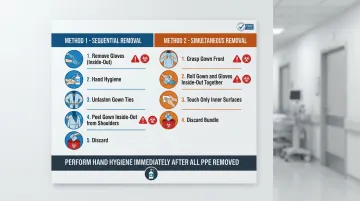
The CDC provides two validated removal methods specifically designed to address this contamination risk. Both require touching only the inside surfaces of the gown throughout the process.
Doffing Gloves (Method 1)
Method 1 removes gloves first, then other PPE items in sequence.
Step-by-step glove removal:
- Using one gloved hand, grasp the palm area of the opposite gloved hand and peel the glove off
- Hold the removed glove in the remaining gloved hand
- Slide bare fingers under the remaining glove at the wrist (touch only the inside surface)
- Peel the second glove off over the first glove, turning it inside-out
- Discard both gloves in a waste container without touching the outer surface
If your hands become contaminated at any point during removal—stop immediately and perform hand hygiene before continuing. Do not proceed with doffing other PPE items with contaminated hands.
Doffing the Gown
After gloves are removed, the gown is next. The gown's contaminated exterior must be turned inward and never allowed to contact your skin or clothing.
Gown removal (Method 1):
- Unfasten the ties carefully—sleeves must not contact your body during this step
- Pull the gown away from your neck and shoulders, touching only the inside
- Turn the gown inside-out as you remove it
- Fold or roll it into a bundle
- Discard it without shaking or flapping
Simultaneous removal (Method 2):
In Method 2, gown and gloves are removed together in one motion:
- Grasp the gown in the front and pull it away from your body so the ties break
- Fold or roll the gown inside-out into a bundle while peeling off gloves at the same time
- Touch only the inside of the gloves and gown with your bare hands
- Discard the bundle
Hand hygiene must be performed immediately after all PPE has been removed, regardless of which method you use. No exceptions.
Safe Work Practices While Wearing PPE
Proper donning gets you protected — but how you behave while wearing PPE determines whether that protection holds. Careless actions during a task can undo even a perfectly fitted gown and glove setup.
Required behaviors:
- Keep hands away from your face
- Limit surfaces touched to only those necessary for the task
- Avoid adjusting the gown, mask, or goggles with gloved hands
- Change gloves immediately if they are torn, punctured, or visibly contaminated
Single-use and disposal mandates:
Gowns and gloves are strictly single-use. OSHA and CDC guidelines are explicit: disposable gloves must be replaced as soon as practical when contaminated, torn, or punctured — they cannot be washed or decontaminated for reuse. Do not use the same gloves across multiple patients or tasks, and do not reuse gowns even for repeated contact with the same patient.
Remove and discard all PPE before leaving the patient's room, work area, or contaminated zone.
Monitoring during use:
Watch for these failure indicators:
- Gown slippage or unfastened ties
- Wrist exposure (gap between glove cuff and gown sleeve)
- Glove tears or visible contamination
- Gown saturation or strikethrough
Any of these signals the need to stop and re-don or replace PPE immediately.
Common PPE Donning and Doffing Mistakes to Avoid
Skipping or Reversing the Donning Sequence
Putting gloves on before the gown means gloves may be contaminated before the task begins—you'll touch the contaminated gown exterior while adjusting it over gloved hands. Reversing the doffing order (removing the gown before gloves) risks dragging the contaminated gown exterior across bare hands. In one observational study of 30 healthcare workers, 57% incorrectly removed their gown before removing their gloves.
Wearing Multiple Gloves or Gowns Simultaneously
Double-gloving or double-gowning creates a false sense of security, reduces dexterity, and raises contamination risk—removing the outer layer can compromise the inner one. The one exception is intentional double-gloving during high-risk procedures.
A human challenge study using the MS2 bacteriophage found virus transfer to hands during PPE removal dropped significantly with double-gloving (23% of participants) versus single-gloving (78%). When double gloves are used, remove the outer pair first, perform hand hygiene, then remove the inner pair.
Touching the Front or Outside of Any PPE Item During Removal
Touching contaminated surfaces during removal is the single most frequent doffing error. Key findings from field studies:
- 58% of workers remove their gown by pulling from the front rather than the shoulders
- The most common doffing mistake is touching the front of the mask or eye protection—the zone most likely to carry contamination
Only inner surfaces and back ties should be handled throughout doffing. If hand contact with a contaminated surface occurs at any point, stop and perform hand hygiene before continuing.
Conclusion
Proper donning and doffing of PPE gowns and gloves requires deliberate technique, not just routine habit. The correct sequence, fit, and removal method are what make PPE actually protective. Studies consistently show that the majority of contamination events occur during removal, not during use—so doffing deserves the same attention as any other step in the process.
Treat PPE procedures as a built-in part of every shift or task. Sourcing quality-rated gowns and gloves from a reliable supplier and following CDC-aligned protocols consistently is what keeps workers and those around them safe.
Frequently Asked Questions
What is the correct order of donning and doffing PPE?
The standard donning sequence is gown → mask/respirator → goggles/face shield → gloves. The standard doffing sequence is gloves → goggles → gown → mask. Hand hygiene is required before donning and immediately after fully doffing all PPE.
What type of isolation is a gown and gloves for?
Gowns and gloves are used for contact precautions to prevent transmission via direct or indirect contact with a patient or contaminated surface. They are also required under standard precautions when exposure to blood, body fluids, or splash is anticipated.
Does PPE include gloves, gowns, and masks?
Yes, PPE includes gloves, gowns, masks/respirators, goggles, and face shields. Each item protects a specific exposure route—respiratory, mucous membrane, or skin—providing layered protection against different hazard types.
What PPE should be worn for influenza?
For routine influenza care, wear a surgical mask, gloves, and gown if contact with infectious material is anticipated. If aerosol-generating procedures like intubation are involved, an N95 respirator replaces the surgical mask, along with gloves, gown, and eye protection.
What are the 7 basic PPE items?
No official "7 basic PPE" list exists, but OSHA categorizes PPE by body part protected:
- Eye/face: goggles, face shields
- Head: hard hats
- Feet: safety shoes
- Hands: gloves
- Body: gowns, coveralls
- Hearing: earplugs
- Respiratory: respirators
Specific combinations depend on the hazard and setting.