Introduction
Hand injuries account for 70% of preventable lost-time incidents on construction jobsites. The Bureau of Labor Statistics reports that framing contractors alone face an injury incidence rate of 4.6 per 100 full-time workers — and the right glove is one of the simplest ways to move that number.
The financial stakes reinforce the point. The average workers' compensation claim for a hand or finger injury exceeds $26,000, with severed tendons costing upwards of $70,000. Choosing the right work glove directly affects worker protection, project timelines, and insurance costs.
Not all work gloves are built for the demands contractors face daily. Heavy materials, sharp rebar, power tools, concrete abrasion, and long hours of wear require purpose-built gloves that balance cut resistance, grip, impact protection, and durability. This guide covers the top-rated gloves for construction and contractor use, what features matter most, and how to choose the right pair for specific jobsite tasks.
Key Takeaways
- Contractors need gloves that balance cut resistance, grip, impact protection, and durability—general-purpose gloves fail under jobsite demands
- Leather excels in abrasion resistance for heavy construction; synthetic reinforced options trade some durability for lighter weight and easier cleaning
- ANSI/ISEA cut ratings (A1–A9) and impact ratings (Level 1–3) help verify gloves meet OSHA PPE requirements for the job
- Top picks include Ironclad General Utility, Mechanix Wear M-Pact, Carhartt Grain Leather, Youngstown Utility Plus, and Wells Lamont HydraHyde
- For crew orders, buy by task type—cut-resistant gloves for demo work, impact-rated for heavy material handling
Why the Right Work Gloves Matter on a Construction Jobsite
Contractors face a range of hand hazards every day:
- Lacerations from sheet metal and sharp edges
- Abrasion from concrete, lumber, and rough surfaces
- Pinch and crush injuries from tools and heavy equipment
No single glove covers all these scenarios, which is why matching the right glove to the right task matters.
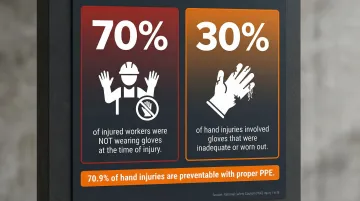
29 CFR 1926.95(a) requires employers to provide, enforce, and maintain hand protection wherever hazardous conditions exist. The stakes are real: OSHA data shows 70.9% of hand and arm injuries are preventable with proper gloves.
Yet 70% of injured workers weren't wearing gloves at all. The remaining 30% had on gloves that were inadequate or already damaged.
The gloves below were selected for professional-grade performance, durability, and task-specific protection relevant to contractors and construction crews. Each model is matched to the hazards you're most likely to encounter on the jobsite.
Best Work Gloves for Contractors and Construction Workers
These gloves were selected based on protection rating, material quality, durability under daily professional use, and task performance relevant to contracting work. Each entry includes a quick-reference table so you can match the right glove to your jobsite needs.
Ironclad General Utility Work Gloves (GUG)
Ironclad is a brand built specifically for trade professionals, widely used across construction, electrical, and general contracting. The General Utility model serves as their foundational glove for multi-task jobsite use.
What sets it apart: reinforced synthetic leather palm, breathable nylon back, adjustable hook-and-loop wrist closure, and machine washable construction for long-term durability. The touchscreen-compatible fingertips allow workers to use mobile devices without removing gloves.
| Spec | Detail |
|---|---|
| Protection Level | Abrasion-resistant synthetic leather palm; ANSI Cut Level A2, Abrasion Level 3, Puncture Level 3 |
| Key Features | Breathable nylon back, hook-and-loop closure, machine washable, touchscreen-compatible fingertips |
| Best Use Case | General contracting, framing, landscaping, material handling |
Mechanix Wear M-Pact Work Gloves
When the work involves power tools or heavy equipment, impact protection moves to the top of the priority list. The Mechanix Wear M-Pact is the flagship choice here — trusted by military, automotive, and construction trades for exactly that reason.
The D3O palm padding and TPR (thermal plastic rubber) knuckle guard provide impact and vibration absorption, making it especially suited for jackhammer or hammer drill use. The glove meets EN 388 impact standards, though buyers requiring ANSI/ISEA 138 compliance should verify the specific SKU variant.
| Spec | Detail |
|---|---|
| Protection Level | D3O palm padding for vibration and impact absorption; meets EN 388 impact standards |
| Key Features | TPR knuckle guard, 0.8mm synthetic leather palm with 2mm D3O, hook-and-loop wrist closure, touchscreen compatible, machine washable |
| Best Use Case | Power tool operation, demolition, heavy equipment handling, concrete work |
Carhartt Men's Grain Leather Work Gloves (GW0518-M)
For heavy-duty construction tasks where maximum abrasion resistance is the priority, the Carhartt GW0518-M delivers. This grain leather glove replaces the legacy A518 style and holds up under the kind of sustained abuse that synthetic gloves often can't match.
The grain leather palm, safety cuff, and System 5 synthetic leather reinforcement at stress points make it a true workhorse. Leather molds to the hand over time, improving fit and comfort during extended wear.
| Spec | Detail |
|---|---|
| Protection Level | Grain leather palm offers high abrasion resistance; safety cuff provides wrist protection |
| Key Features | System 5 synthetic leather knuckle and reinforcement, safety cuff, open back for breathability, available in multiple sizes |
| Best Use Case | Framing, roofing, masonry, heavy material handling |
Youngstown Glove Utility Plus Performance Gloves
Youngstown has a strong following among skilled trades professionals. The Utility Plus is engineered for all-day wear with a focus on dexterity without sacrificing protection.
The non-slip reinforced palm provides secure grip, and the neoprene Velcro cuff ensures a secure fit. Machine washable construction extends the glove's lifespan. While specific ANSI cut ratings aren't listed for this model, the reinforced palm offers practical protection for general construction tasks.
| Spec | Detail |
|---|---|
| Protection Level | Non-slip reinforced palm for secure grip; moderate abrasion resistance |
| Key Features | Reinforced palm, neoprene Velcro cuff, machine washable, available in extended sizes |
| Best Use Case | General contracting, material handling, tasks requiring dexterity and secure grip |
Wells Lamont HydraHyde Leather Work Gloves (1164)
Outdoor crews working in wet or variable conditions need a glove that won't stiffen up mid-shift. The Wells Lamont HydraHyde 1164 addresses that directly — it's a water-resistant leather glove that maintains flexibility even when wet.
The HydraHyde leather treatment repels moisture while keeping the glove pliable, the keystone thumb adds durability at a high-wear point, and the affordable price makes it a strong option for outfitting larger crews.
| Spec | Detail |
|---|---|
| Protection Level | Water-resistant 100% grain cowhide; moderate abrasion resistance suitable for general construction |
| Key Features | HydraHyde moisture-repelling leather, keystone thumb, safety cuff with ball and tape wrist, stays flexible when wet |
| Best Use Case | Outdoor construction, landscaping, concrete work, utility and OSP contracting in wet conditions |
Key Features to Look for in Construction Work Gloves
Choosing the right gloves comes down to five factors: material, safety ratings, dexterity, fit, and durability. Get any one of these wrong and you're either under-protected or fighting your own gloves all day.
Material Options: Match the Material to the Task
Start with material type — it determines what hazards the glove can handle:
- Full-grain leather: Maximum abrasion resistance for heavy construction tasks like framing, roofing, and masonry. Molds to your hand over time for custom fit.
- Synthetic leather: Lighter weight, machine washable, and more affordable. Suitable for general construction and material handling.
- Nitrile-coated: Best for electrical work or chemical exposure. Provides grip in wet conditions and protects against oils and solvents.
- Water-resistant leather (HydraHyde): Maintains flexibility in wet conditions, ideal for outdoor construction and OSP work.
ANSI/ISEA Safety Ratings: Know What the Numbers Mean
OSHA 1910.138(b) requires that glove selection be based on a specific evaluation of tasks, conditions, and hazards. ANSI/ISEA ratings provide the objective data you need to comply.
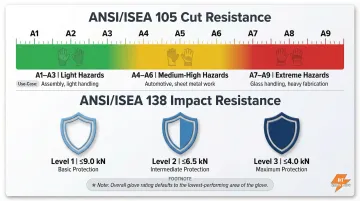
ANSI/ISEA 105 Cut Resistance (A1-A9 scale):
- A1-A3: Light to moderate hazards (general material handling, packaging, light construction)
- A4-A6: Medium to high hazards (HVAC, metal fabrication, glass handling, general construction)
- A7-A9: Heavy to extreme hazards (metal stamping, sharp steel, heavy recycling)
ANSI/ISEA 138 Impact Resistance (Level 1-3):
- Level 1: Base protection (≤9.0 kN mean transmitted force)
- Level 2: Medium protection (≤6.5 kN)
- Level 3: Highest protection (≤4.0 kN) for severe impact environments
Lower kN ratings mean the glove absorbs more energy, providing better protection. Note that the overall glove rating is determined by the lowest-performing area: if fingers are Level 1 and knuckles are Level 2, the glove is rated Level 1.
Dexterity vs. Protection: Find the Right Balance
Thicker reinforced gloves provide more protection but reduce feel for precision work. Research shows that wearing industrial gloves reduces grip strength by 11.3% to 50.1%, with thicker gloves causing the most severe reductions.
Match glove thickness to the task:
- Framing/carpentry: prioritize dexterity, A2-A4 cut resistance
- Rebar handling: balance cut resistance (A3-A5) with impact protection
- Electrical work: thinner cut-resistant gloves that preserve finger sensitivity
- Concrete finishing: abrasion resistance without excessive bulk
Fit and Sizing: A Safety Issue, Not Just Comfort
Gloves that are too loose reduce grip and can catch on machinery. Gloves that are too tight cause hand fatigue and reduce circulation.
How to measure your hand:
- Measure hand circumference around the knuckles, excluding the thumb
- Measure from the base of the palm to the tip of the middle finger
- Match both measurements to the manufacturer's sizing chart
Different brands use different measurement methods, so always check the specific sizing guide. Ironclad uses a proprietary 16-point measurement system, while Mechanix measures palm width and finger length.
Durability and Maintenance: Make Your Investment Last
Key durability features worth checking before you buy:
- Reinforced thumb saddle — the single highest-wear area on most work gloves
- Double-stitched seams at stress points
- Palm patches for extended wear
- Machine washable construction, which removes abrasive dirt and corrosive sweat that degrade material over time
OSHA and NIOSH emphasize continuous inspection and replacement of damaged PPE. Inspect gloves before every shift for tears, holes, degraded coatings, or stiffening. Replace immediately if compromised — there's no published benchmark for glove lifespan because it depends on task intensity, exposure conditions, and hours of use.
How We Chose the Best Work Gloves for Contractors
These gloves were assessed specifically for professional contractor use. We evaluated protection ratings, material quality, construction-specific task suitability, and brand reputation among trade professionals.
Common mistakes contractors make when buying gloves:
- Choosing by price alone without checking ANSI ratings
- Buying consumer-grade gloves for professional use
- Selecting a single glove type for all tasks on a jobsite
- Ignoring fit as a safety factor
- Failing to replace damaged or worn gloves
For distributors and contractors sourcing safety gloves at scale, supplier relationships matter as much as product selection. DT Sales Reps supplies safety equipment alongside conduit, cable, and construction tools to electrical and OSP contractors, making it a practical single-source option for keeping PPE stocked across active crews.
Consistent supply means no gaps in PPE coverage mid-project—a real operational risk when managing multiple crews across a jobsite.
Conclusion
The best work glove for a contractor is the one matched to the specific task and hazard. No single glove is optimal for every jobsite scenario. Building a toolkit of two or three types is a smart strategy for professional crews:
- Heavy-duty leather for abrasion resistance and general labor
- Impact-rated gloves for power tool and demolition work
- Cut-resistant gloves for precision tasks and sharp materials
Evaluate gloves not just on price, but on ANSI ratings, material durability, and fit. The right PPE decision directly affects worker safety, productivity, and long-term hand health. According to industry safety data, hand injury claims average $26,000—and 70.9% of those injuries are preventable with proper gloves. That makes quality hand protection one of the highest-return investments a crew can make.
For contractors and distributors looking to source work gloves and other jobsite safety essentials, contact DT Sales Reps at DavidS@DTTexas.com or 281-900-1506.
Frequently Asked Questions
What are the best work gloves to buy?
The best work gloves depend on the task. For heavy construction, full-grain leather or impact-rated synthetic gloves (like Carhartt GW0518-M or Mechanix M-Pact) are top choices, while reinforced synthetic options like Ironclad General Utility suit general contracting and material handling.
What type of gloves do construction workers use?
Construction workers typically use leather, synthetic leather, or reinforced hybrid gloves rated for abrasion, cut, or impact resistance. The right choice depends on the trade — framing and roofing favor durable leather, electrical work requires insulated or dielectric options, and concrete work calls for abrasion-resistant synthetics.
What ANSI cut level do I need for construction work?
Most general construction tasks are covered by A2–A4 cut resistance. Rebar handling, sheet metal work, or any task involving sharp edges typically requires A5 or higher to meet ANSI/ISEA 105 protection standards.